I finally understood why my statement felt scattered. The course helped me separate the story I wanted to tell from everything I was trying to squeeze in.
6 ChaptersStructured personal statement course
AI Credits IncludedUse across eligible analysis tools
400 words = 1 creditSimple, predictable usage
1–4 months accessChoose the runway you need
The problem
Your residency story is too important to leave to guesswork.
Many applicants have strong experiences but struggle to turn them into a personal statement that feels focused, mature, and memorable. The challenge is not “writing more”—it is knowing what belongs, what needs proof, and what a reviewer is likely to notice.
“I don’t know what to write.”
Use a guided framework to move from scattered experiences to a clear narrative.
“My draft sounds generic.”
Surface vague phrases, repetitive patterns, and weak evidence before you submit.
“I need objective feedback.”
Get structured analysis on clarity, originality, AI patterns, vocabulary, and more.
Personal Statement AI Suite
Four focused tools for a stronger personal statement.
Check originality, clean up mechanics, examine AI probability signals, and get structured feedback before you finalize your statement.
Plagiarism CheckerDetect content from outside sources and ensure originality.
Grammar CheckerCorrect grammar and spelling errors in your text.
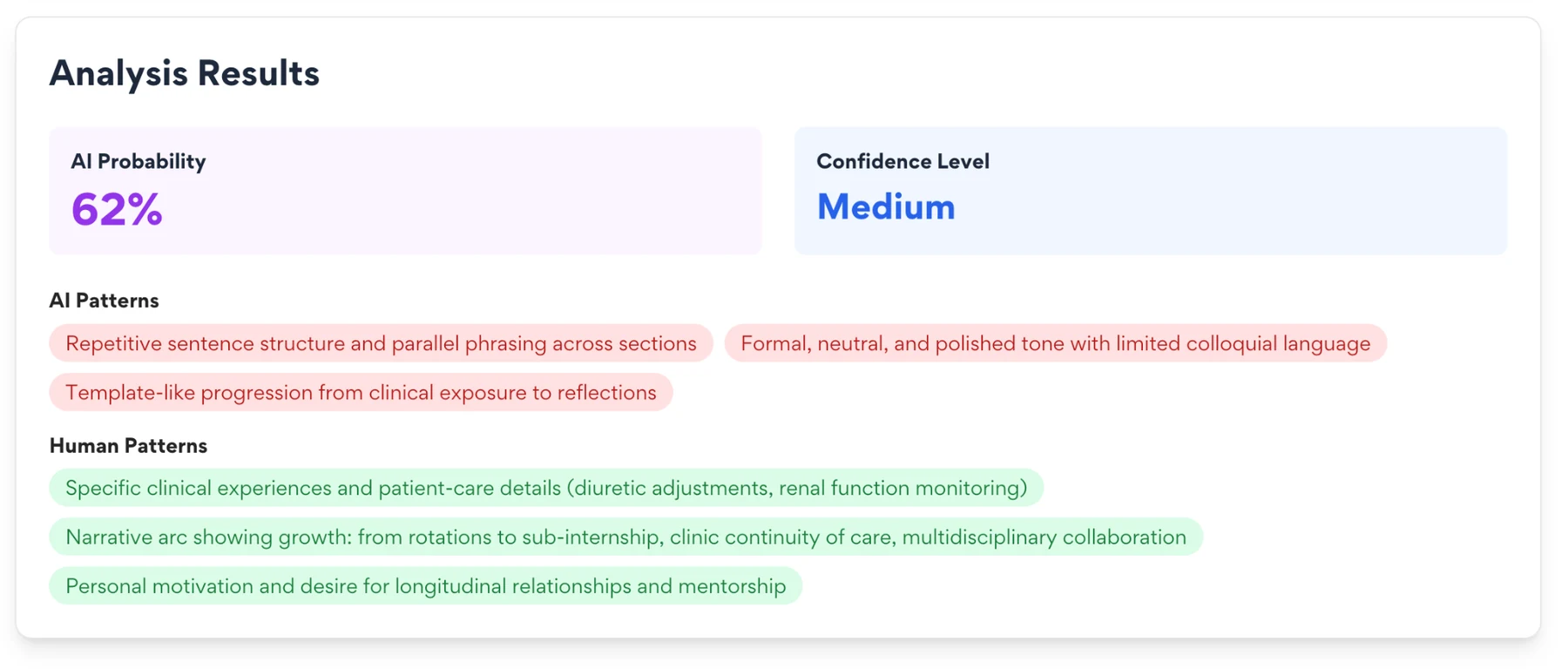
AI LensIn-depth results on AI probabilities.
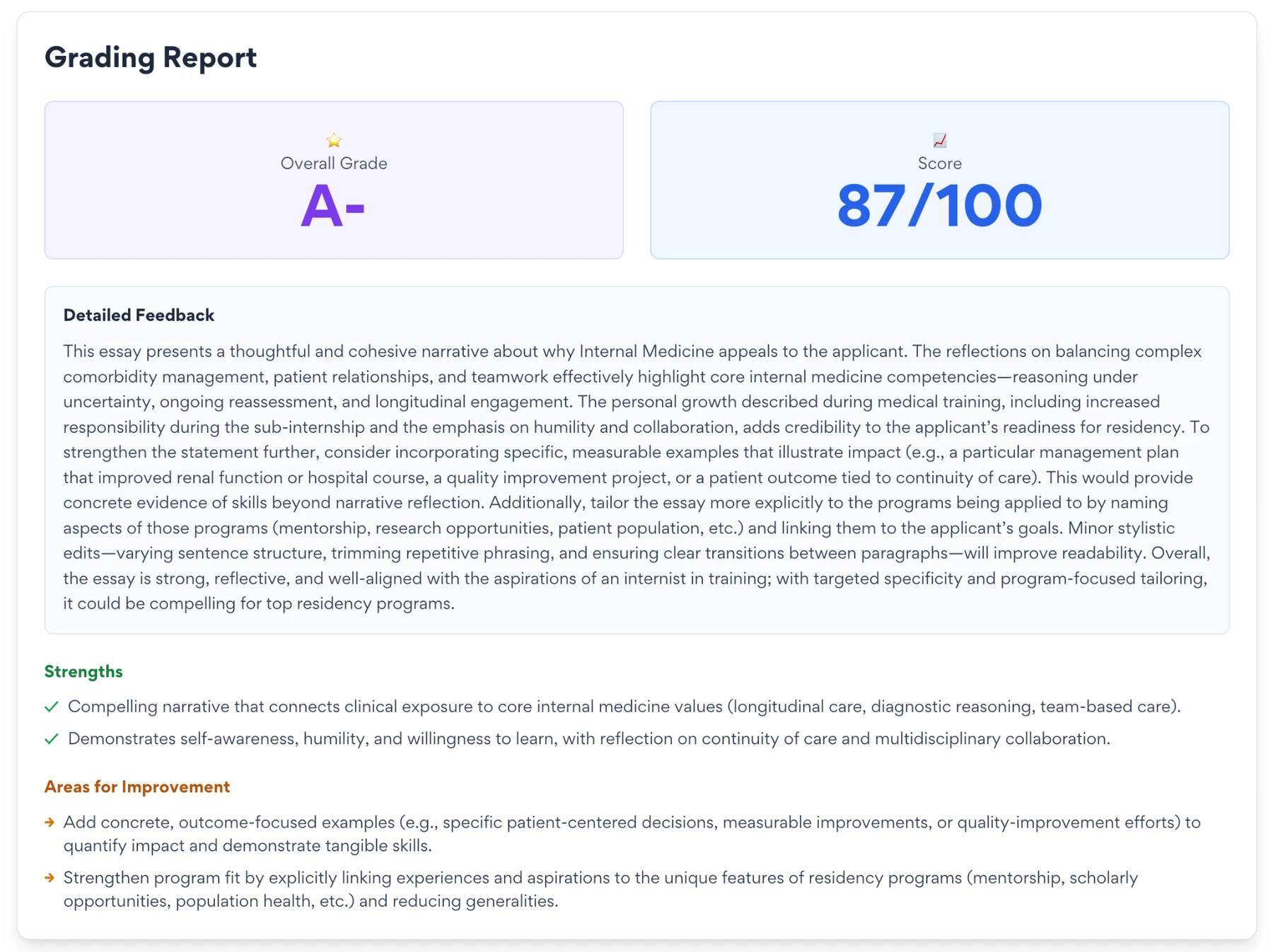
Advanced Personal Statement AnalyzerGrade personal statements faster while delivering in-depth feedback.
Grammar CheckerCorrect grammar and spelling errors in your text.
AI LensIn-depth results on AI probabilities.
Advanced Personal Statement AnalyzerGrade personal statements faster while delivering in-depth feedback.
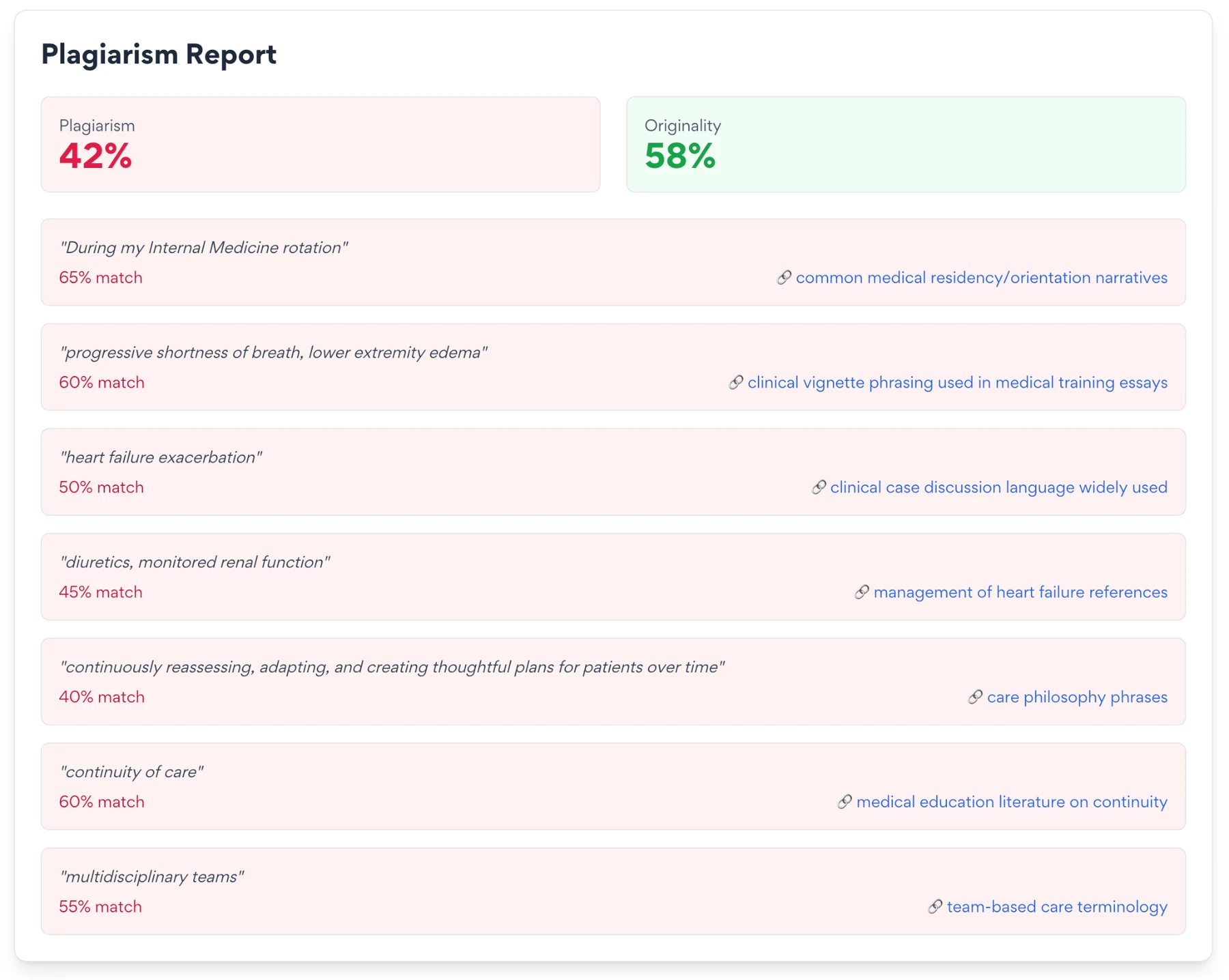
Plagiarism Checker. Review originality and inspect potentially overlapping phrases before submission.
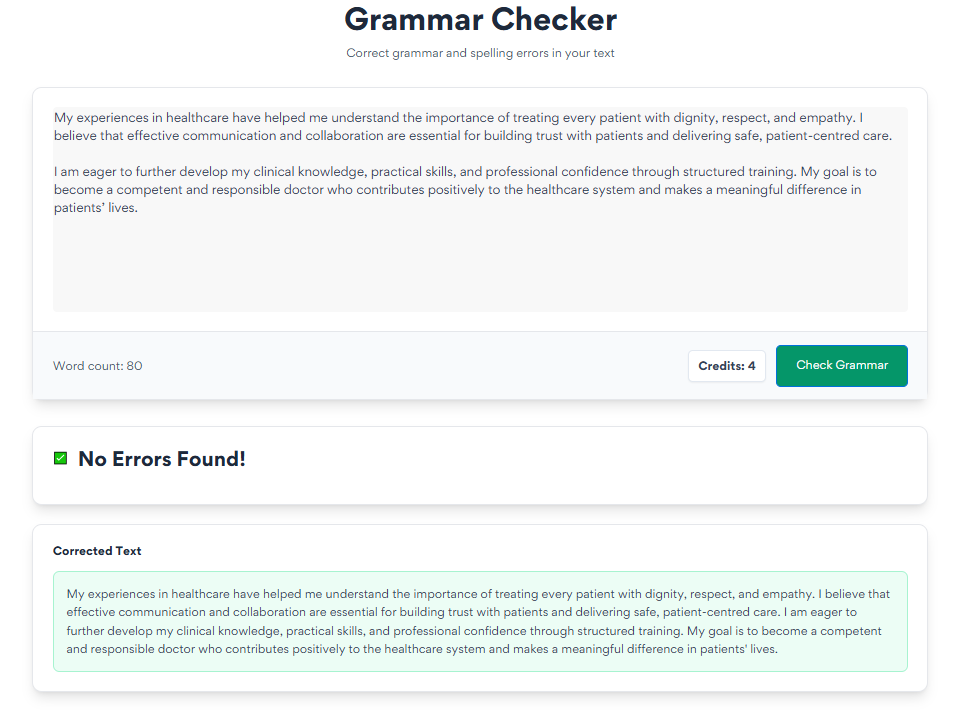
Grammar Checker. Review writing mechanics and clean up grammar and spelling as part of the same statement-checking workflow.
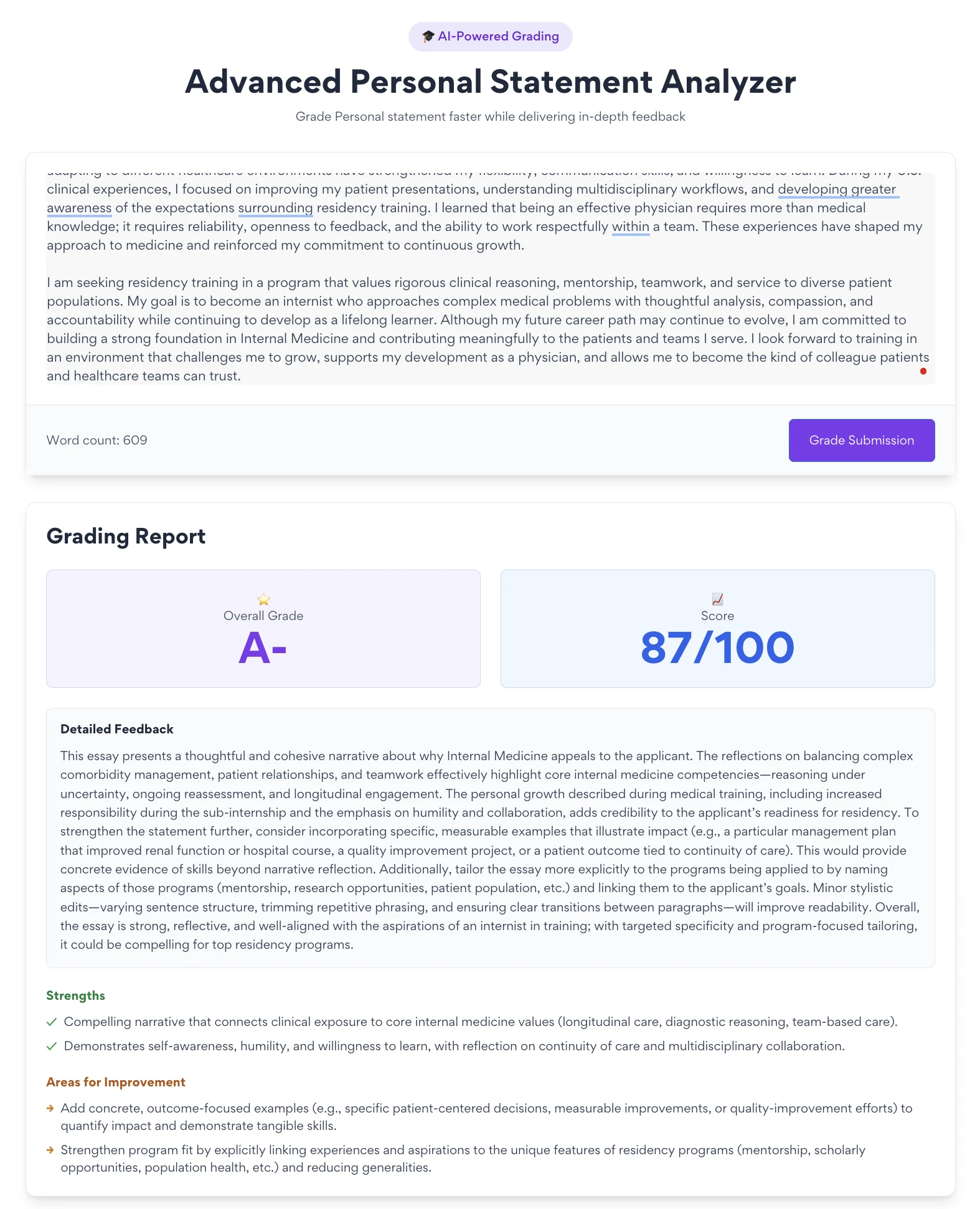
Advanced Personal Statement Analyzer. Submit your statement for structured grading and in-depth feedback.
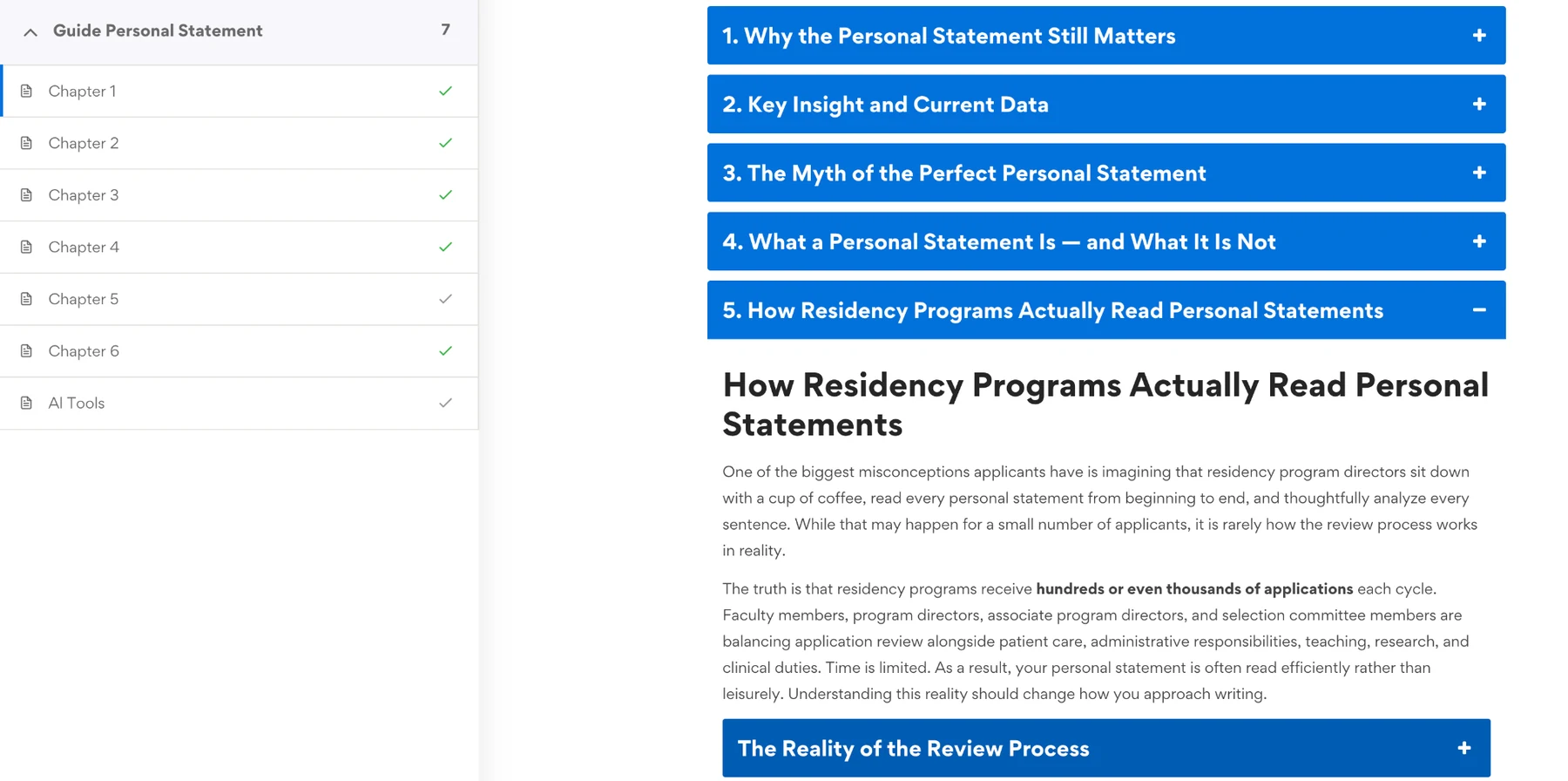
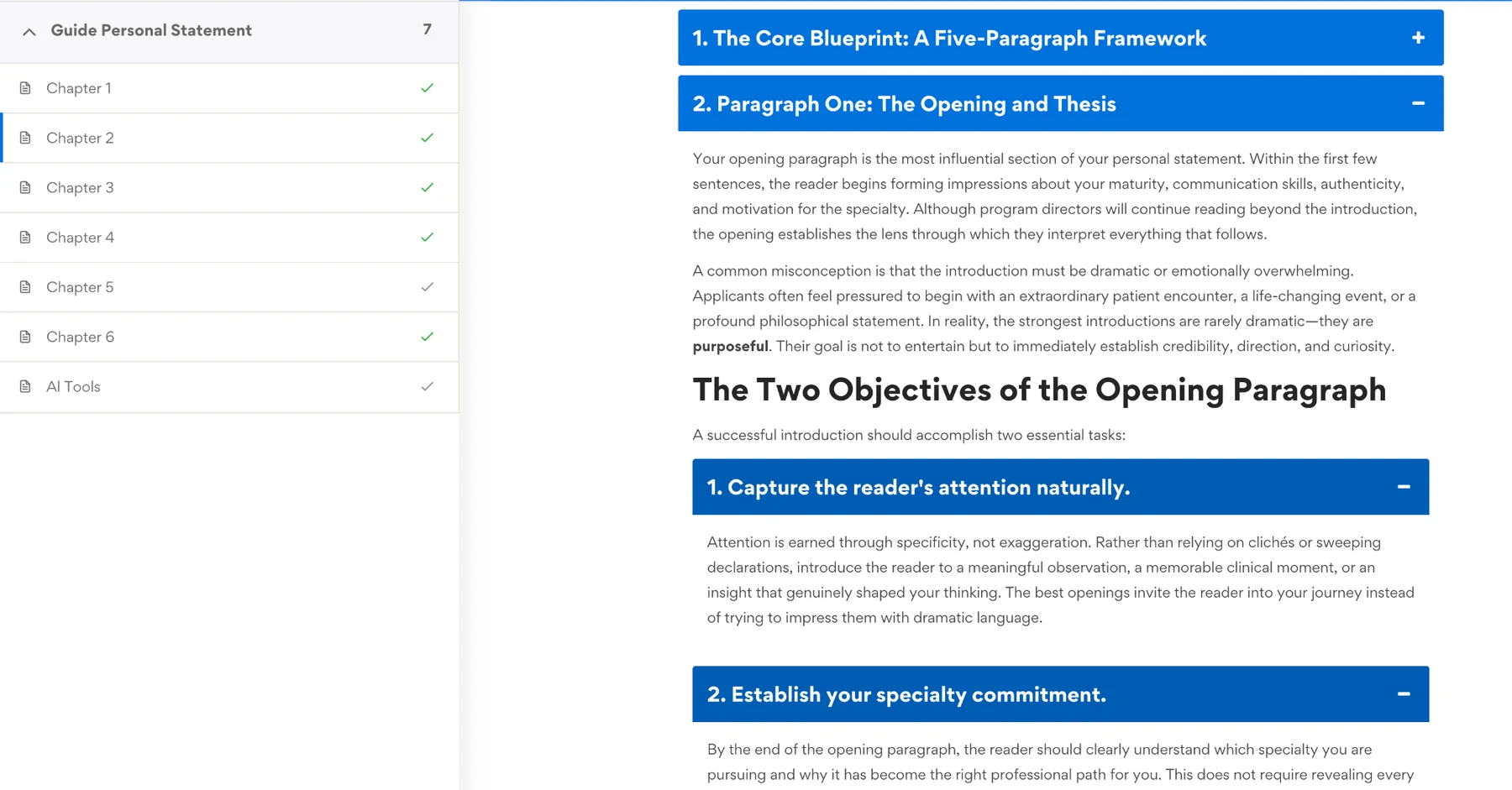
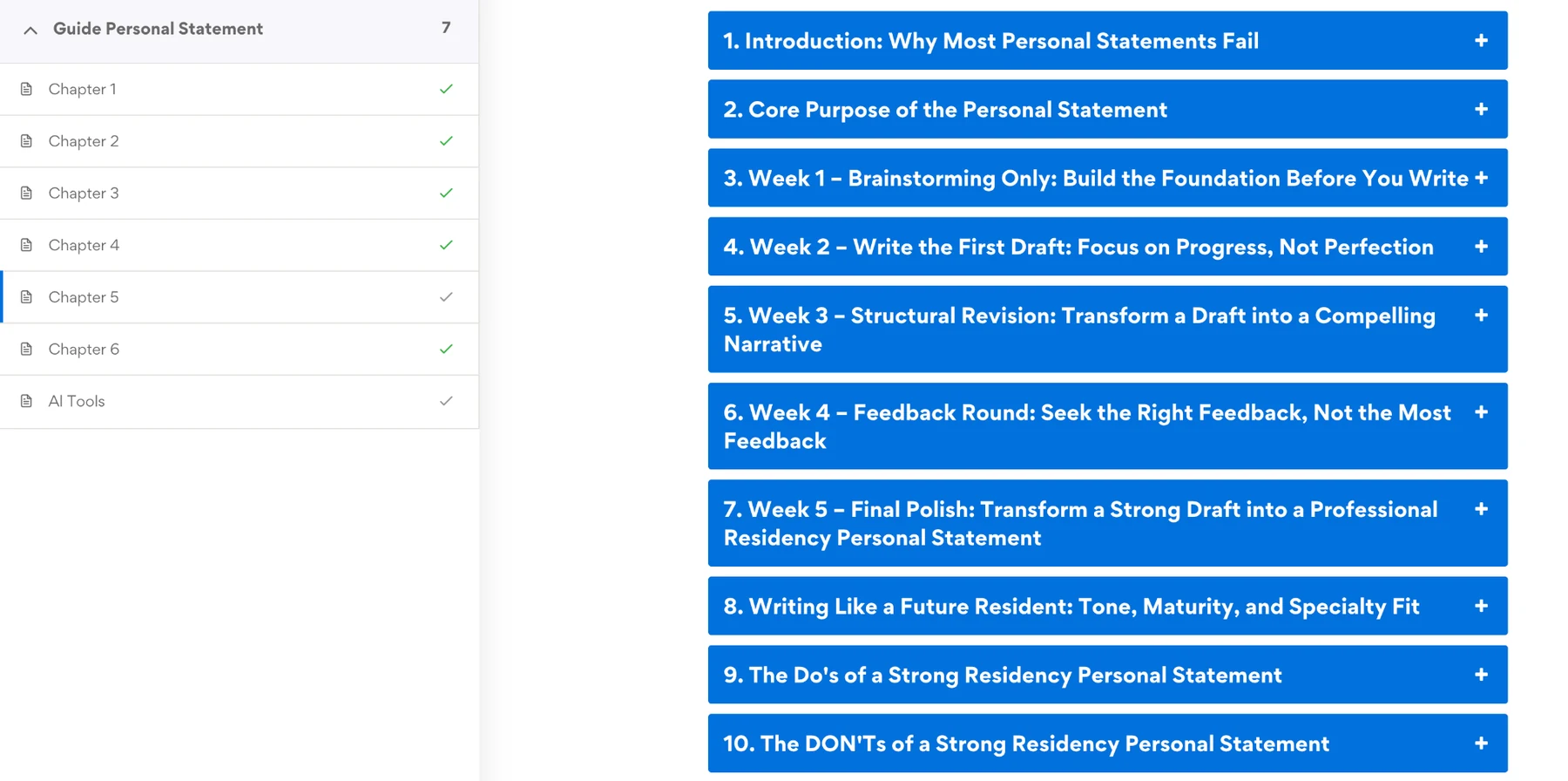
The course
Learn the strategy behind a statement reviewers can follow.
Move from foundational thinking to structure, writing, revision, and real-example analysis. The course is designed to teach the reasoning behind strong personal statements—not just hand you a template.
- 1Understand how reviewers read.
Learn what matters, what creates uncertainty, and how to position your story. - 2Build a clear framework.
Use a five-paragraph blueprint plus alternative structural models when appropriate. - 3Write with evidence, not adjectives.
Show specialty fit, maturity, and professional qualities through meaningful experiences. - 4Revise like an editor.
Work through feedback, tone, clichés, final polishing, and audit checklists.
How it works
A simple revision loop for a high-stakes document.
1
Learn
Use the course to understand structure, reviewer psychology, specialty fit, and common errors.
2
Draft
Build a first version from real experiences, not generic claims or résumé repetition.
3
Analyze
Run targeted checks for grading, originality, AI patterns, vocabulary, and clarity.
4
Refine
Revise intentionally, keep your voice, and use your remaining credits where they add value.
ERAS CV Addon
Carry the same review discipline into your ERAS CV.
Use the addon to check AI-content signals, authorship transparency, vocabulary patterns, and source support while polishing the rest of your application materials.
AI Content DetectorScan for potential AI content in your text.
Aura ScanPreserve originality and verify authorship transparency.
AI Vocabulary DetectorIdentify the most commonly used AI words.
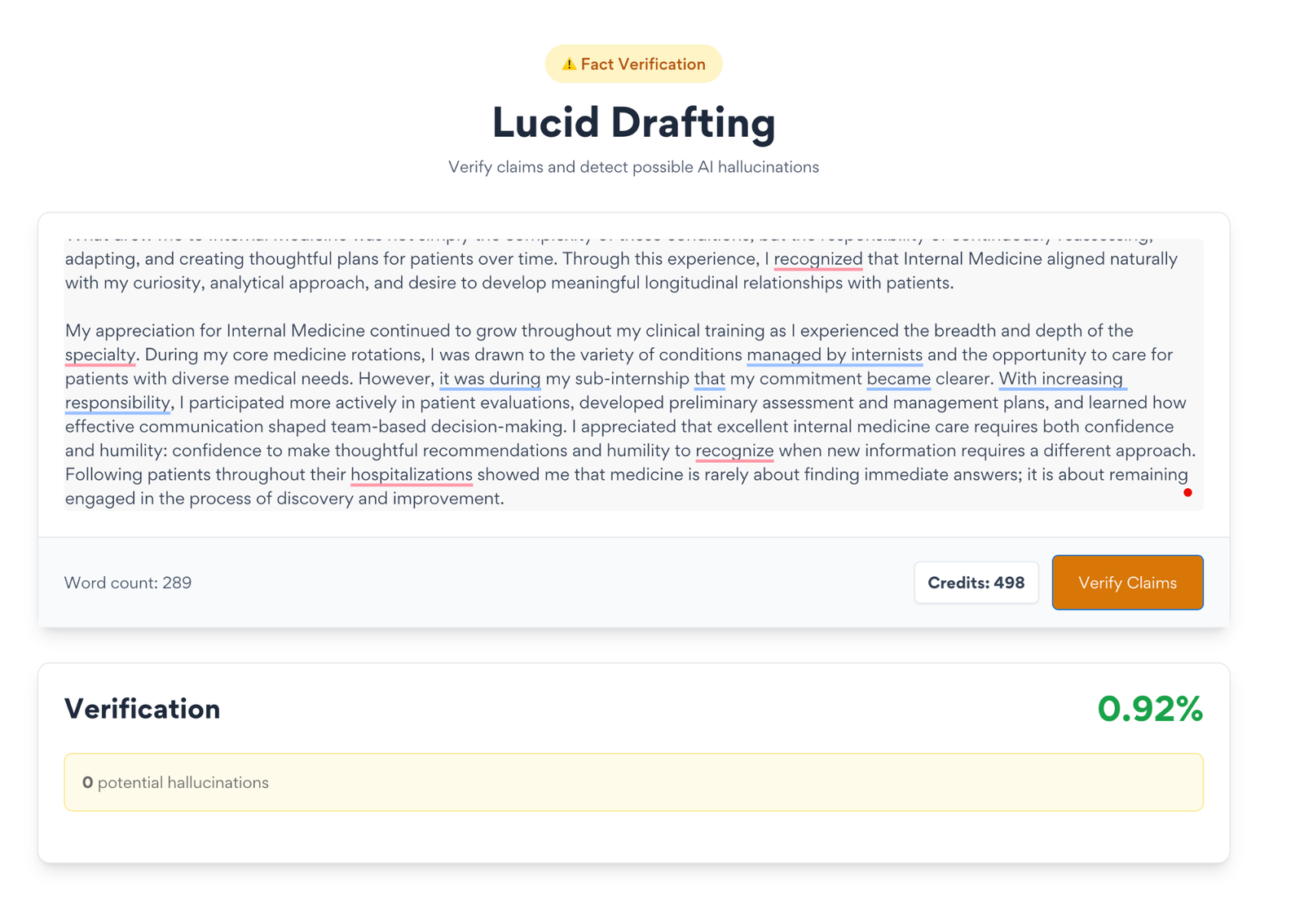
Lucid DraftingVerify and find reliable sources for your citations.
Aura ScanPreserve originality and verify authorship transparency.
AI Vocabulary DetectorIdentify the most commonly used AI words.
Lucid DraftingVerify and find reliable sources for your citations.
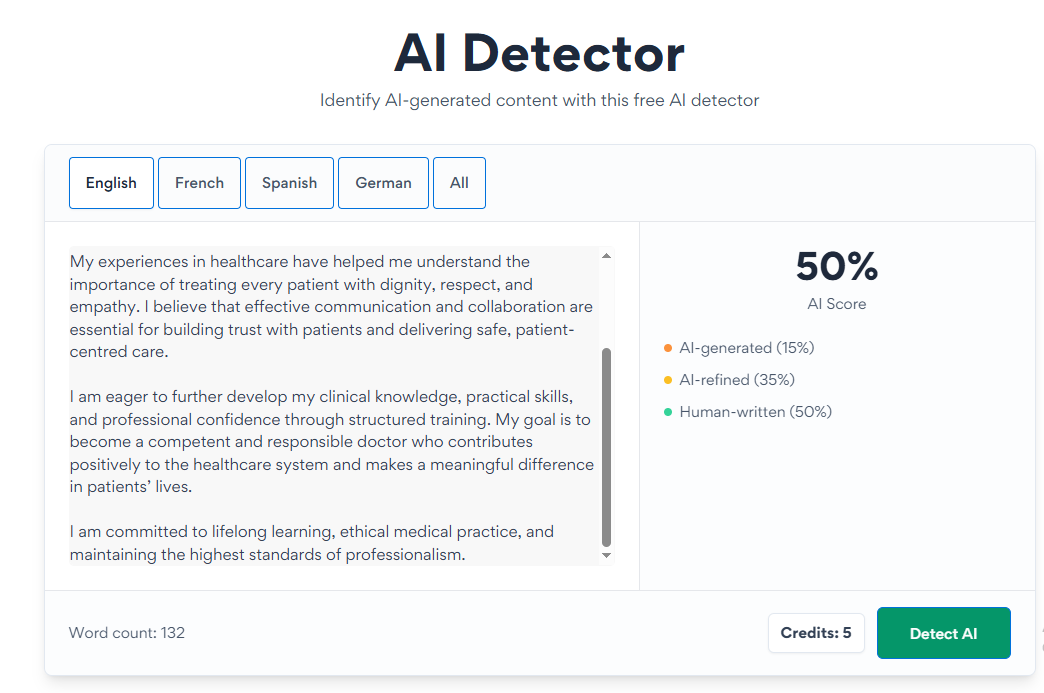
AI Content Detector. Scan text for AI-generated signals and review the score in a clean, readable layout.
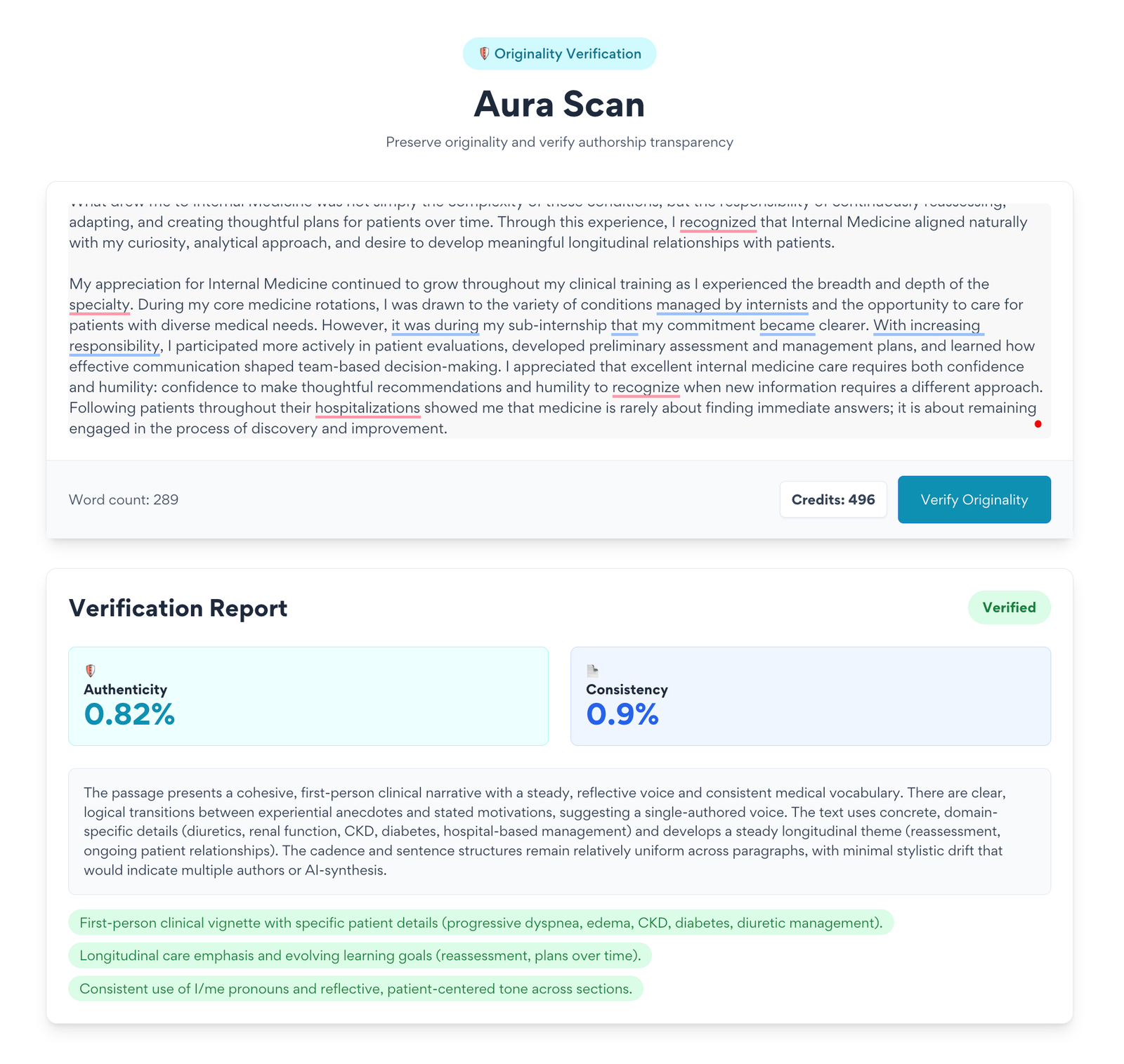
Aura Scan. Review authenticity and consistency signals in a structured originality-verification report.
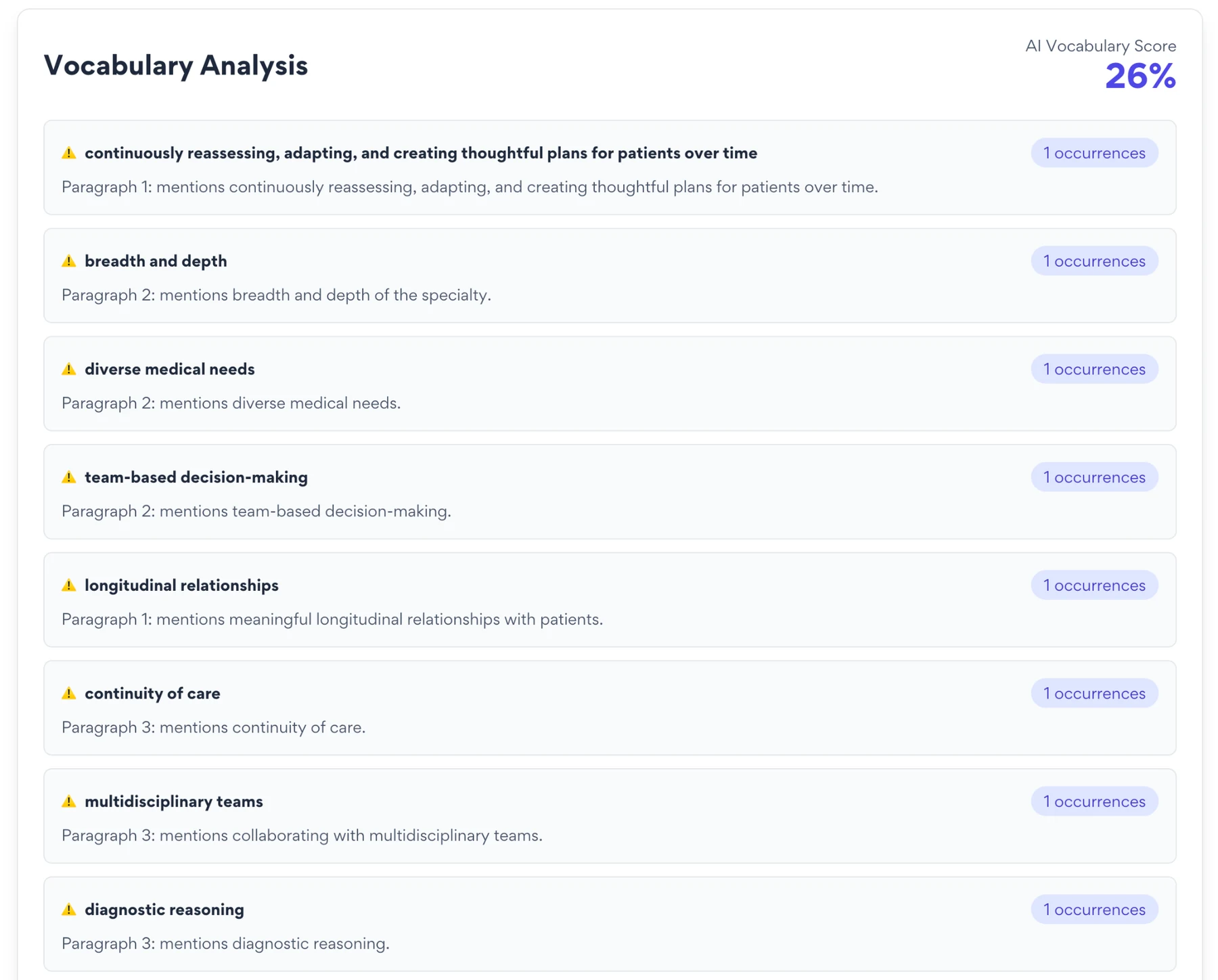
AI Vocabulary Detector. Identify commonly used AI-associated phrases and decide what to rewrite in your own natural voice.
Applicant perspective
The grading report was more useful than a generic score because it showed exactly where my examples were strong and where I was still being vague.
I kept rewriting my opening for days. The framework gave me a practical way to move forward without trying to make the first paragraph dramatic.
The AI-pattern and vocabulary checks made me notice phrases that sounded polished but not really like me. My final version felt more natural.
I liked that the course did not tell me to copy a template. It explained what each paragraph should accomplish, which made revising much easier.
The plagiarism and originality view gave me a reason to revisit phrases I had seen in too many sample statements. That alone made my draft feel less generic.
The week-by-week workflow was the part I needed most. It stopped me from editing every sentence before I had even figured out the main story.
I had strong experiences but was presenting them like a CV. The course helped me turn them into evidence of how I think and work as a future resident.
The detailed feedback made it clear that I was repeating the same idea in three different ways. Cutting that repetition made the statement much stronger.
I was nervous about sounding too confident about my prior experience. The positioning lessons helped me describe it without sounding defensive or overqualified.
The biggest change was clarity. I stopped trying to impress the reader and started making it easier for them to understand why this specialty fits me.
Seeing the statement through grading, originality, vocabulary, and AI-pattern views gave me a much better revision process than asking five people for random edits.
The examples helped me understand the difference between a paragraph that sounds good and one that actually proves something about the applicant.
I used the ERAS CV tools after working on the statement, and the same focus on specificity helped me make the rest of my application more consistent.
Improvement suggestion
The workflow is strong, but I would love a one-page specialty-specific final checklist that I could open right before submission and use as a last review.
Plans
Choose the access window that fits your application timeline.
All three tiers include the course and all eight tools. The main differences are access duration and included credits.
Starter
$29.99
Full course access for 1 month · 60 AI credits
- 400 input words = 1 AI credit
- Plagiarism Checker
- Grammar Checker
- AI Lens
- Advanced Personal Statement Analyzer
- AI Content Detector
- Aura Scan
- AI Vocabulary Detector
- Lucid Drafting
MOST FLEXIBLE
Basic
$39.99
Full course access for 2 months · 80 AI credits
- 400 input words = 1 AI credit
- Plagiarism Checker
- Grammar Checker
- AI Lens
- Advanced Personal Statement Analyzer
- AI Content Detector
- Aura Scan
- AI Vocabulary Detector
- Lucid Drafting
Advanced
$56.99
Full course access for 4 months · 150 AI credits
- 400 input words = 1 AI credit
- Plagiarism Checker
- Grammar Checker
- AI Lens
- Advanced Personal Statement Analyzer
- AI Content Detector
- Aura Scan
- AI Vocabulary Detector
- Lucid Drafting
FAQ
Before you choose a plan.